

Valdemar Danry, PhD at MIT Media Lab
| Cognitive Augmentation | AI | Brain-Computer Interfaces | Previously at Meta Reality Labs & Microsoft Research
Valdemar Danry is an award-winning researcher and artist at the Massachusetts Institute of Technology (MIT), where he explores how AI can amplify rather than erode human cognition. He is also a founding and steering comittee member of the MIT Media Lab Advancing Humans with AI (AHA) Research Program. By combining insights from AI, cognitive science, and philosophy, he designs interactive large language model systems and wearable cognitive tools that help people think more critically, reason more clearly, and maintain intellectual independence in an age of automation.
Danry's work has been published in premier academic venues including Nature: Machine Intelligence, Frontiers in Computer Science, and the ACM CHI Conference on Human Factors in Computing Systems. He has worked with international researchers from UC Berkeley, Harvard, Georgia Tech, and ETH Zürich, as well as with leading industry labs such as OpenAI, Google DeepMind, Meta Reality Labs, and Microsoft Research. His work has been exhibited at BOZAR Brussels Centre for Fine Arts, Ars Electronica, Electrical Artifacts, and the MIT Museum, and featured in The New York Times, Wired, Forbes, Scientific American, Time Magazine, The Guardian, and TEDx.
![]()

RESEARCH
Themes
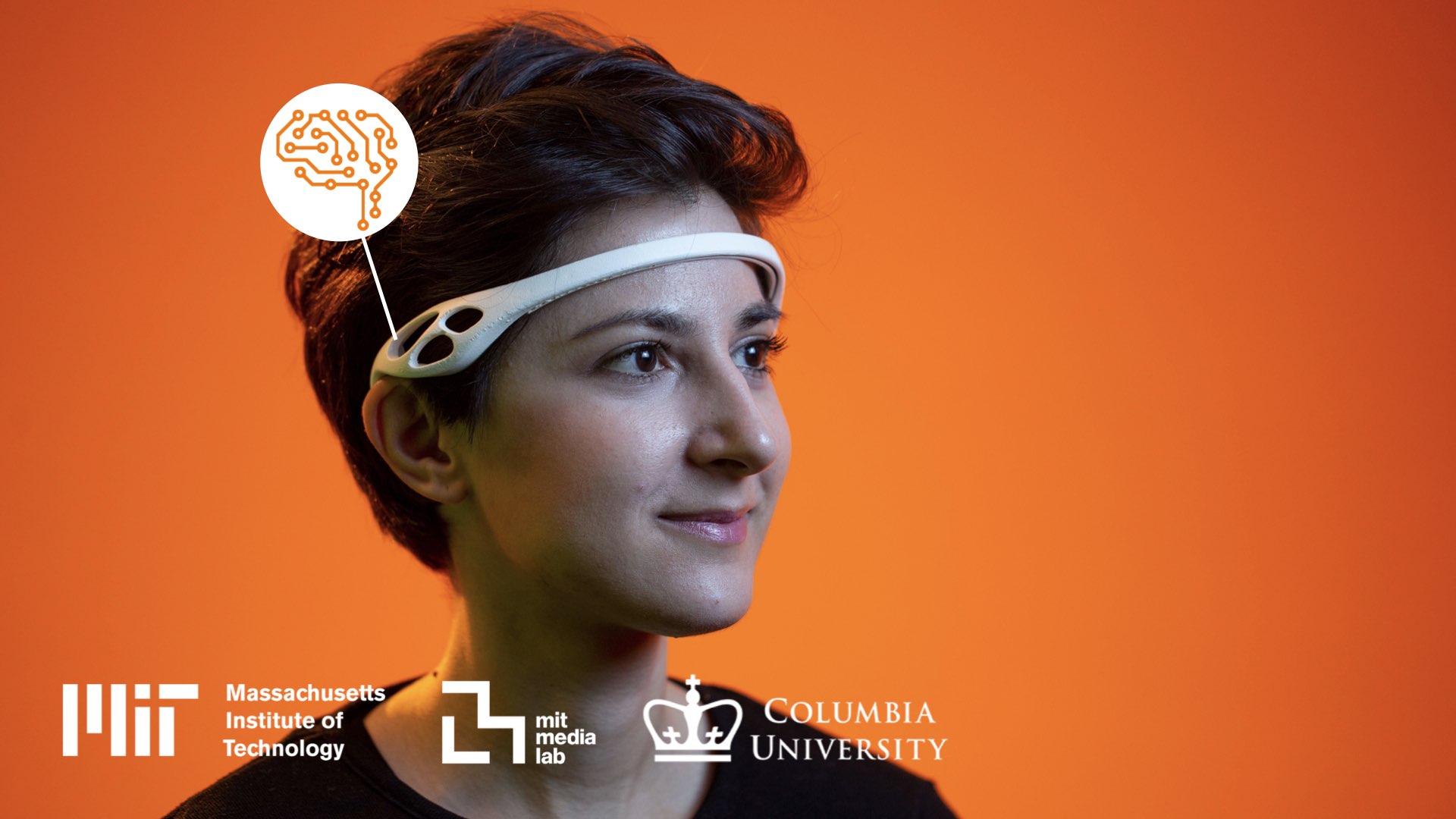
 Theme | AI Agents and Wearables
Press
Selected Press
- The Guardian — Over-reliance on chatbots can diminish critical-thinking skills, study finds, June 19, 2026
- The Economic Times — Human Operator: MIT’s vision for embodied AI and skill acceleration, May 5, 2026
- Forbes — MIT Media Lab to Put Human Flourishing at the Heart of AI R&D, April 14, 2025
- Scientific American — Can Digital Ghosts Help Us Heal?, November 18, 2025
- Bloomberg — OpenAI Study Finds Links Between ChatGPT Use and Loneliness, March 21, 2025
- Forbes — MIT Media Lab to Put Human Flourishing at the Heart of AI R&D, April 14, 2025
- MIT Technology Review — A chatbot that asks questions could help you spot when it makes no sense, April 28, 2023
- Forbes — MIT Media Lab Fluid Interfaces: Professor Maes’ Team and Research Powering Humans, June 22, 2022
All Press
All Press
- MIT Technology Review — Your Brain on AI, August 25, 2026
- The Guardian — Over-reliance on chatbots can diminish critical-thinking skills, study finds, June 19, 2026
- Fast Company — AI’s impact on cognitive ability: MIT study reveals more troubling data, June 16, 2026
- Digital Trends — If you’re using AI tools like ChatGPT to fact-check news, there’s some bad news for you, June 2026
- AZoRobotics — AI Assistance Weakens Independent News Judgment, June 2026
- Crypto Briefing — MIT study finds AI deteriorates users’ ability to spot fake news, June 2026
- GLITCHED — New study shows people are more reliant on ChatGPT to fact-check news—even if it’s incorrect, June 2026
- Decrypt — AI Helped People Spot Fake News—Then Made Them Worse at It: MIT, June 10, 2026
- Yahoo Tech — AI Helped People Spot Fake News—Then Made Them Worse at It, June 2026
- MIT News — The consequences of relying on AI for accurate news, June 9, 2026
- Tech Xplore — The consequences of relying on AI for accurate news, June 9, 2026
- The Economic Times — Human Operator: MIT’s vision for embodied AI and skill acceleration, May 5, 2026
- India Today — MIT students build AI system that can control your body, May 4, 2026
- Founded — These MIT hackathon winners built an AI that can control your body, May 2026
- CNBC — When you should—and shouldn’t—use ChatGPT as a therapist, according to experts, March 7, 2026
- Psychiatric Times — Falling in Love With a Chatbot, 2026
- Futura — The more people use ChatGPT, the more this hidden psychological risk grows, 2026
- Tech Business News — Are chatbots condemning children to antisocial behaviour?, 2026
- Express Computer — Artificial empathy: When perfect listeners create imperfect connections, 2026
- Impact in the 21st Century — Valdemar Danry: Your Brain on ChatGPT, Cognitive Debt, AI Exoskeletons, and the Future of Critical Thinking, 2026
- Scientific American — Can Digital Ghosts Help Us Heal?, November 18, 2025
- The Economist — A new industry of AI companions is emerging, November 6, 2025
- Forbes Technology Council — Why Students Need AI Tutors, Not Just Chatbots, October 16, 2025
- StateScoop — Citing risk to kids, California bill targets controversial AI companion chatbots, 2025
- Gizmodo — ChatGPT Tells Users to Alert the Media That It Is Trying to “Break” People, 2025
- The New York Times — ChatGPT and AI chatbots can encourage delusions and conspiracy spirals, June 13, 2025
- ChosunBiz — Coverage of ChatGPT use, loneliness, and emotional dependence, May 28, 2025
- Analytics India Magazine — Seeking therapy from an AI bot? Think again, 2025
- Marketplace — Study finds AI chatbot use can increase loneliness, May 5, 2025
- The New York Times Opinion — The risks chatbots may pose to teenagers, April 16, 2025
- Forbes — MIT Media Lab to Put Human Flourishing at the Heart of AI R&D, April 14, 2025
- El País — What early studies say about human relationships with AI chatbots, April 1, 2025
- The Guardian — Heavy ChatGPT users tend to be more lonely, suggests research, March 25, 2025
- Fortune — ChatGPT may be making its most frequent users more lonely, March 24, 2025
- Inc. — OpenAI says using ChatGPT can make you lonelier. Should you limit AI use at work?, March 2025
- Fast Company — ChatGPT may be making us lonelier, March 2025
- VICE — People who use ChatGPT too much are becoming emotionally addicted to it, March 2025
- Gizmodo — Lonely people are even sadder after using chatbots, research finds, March 2025
- New Atlas — ChatGPT conversations linked to isolation and loneliness, March 2025
- Futurism — ChatGPT dependence and addiction, March 2025
- CBS News — New research shows link between ChatGPT use and loneliness, March 2025
- LiveMint — Can ChatGPT affect you emotionally? Here’s what an OpenAI study reveals, March 2025
- Virtualization Review — OpenAI studies emotional effect of AI usage, March 2025
- MIT Technology Review — OpenAI has released its first research into how using ChatGPT affects people’s emotional well-being, March 21, 2025
- Bloomberg — OpenAI Study Finds Links Between ChatGPT Use and Loneliness, March 21, 2025
- Engadget — Joint studies from OpenAI and MIT found links between loneliness and ChatGPT use, March 21, 2025
- Business Insider — OpenAI says ChatGPT might be making its most frequent users more lonely, March 2025
- Business Insider — ChatGPT brainstorming, addiction, dependence, and negative consequences, March 2025
- OpenAI — Early methods for studying affective use and emotional well-being on ChatGPT, March 21, 2025
- The Hill — AI companions and mental health, 2025
- HCAI@AU — Forget Me Not: AI-Generated Characters as Digital Mementos, March 17, 2024
- MIT Technology Review — A chatbot that asks questions could help you spot when it makes no sense, April 28, 2023
- SoylentNews — Wearable Reasoner: Towards Enhanced Human Rationality Through a Wearable AI Assistant, December 13, 2022
- The Conversation — Deepfakes are being used for good—here’s how, 2022
- Forbes — MIT Media Lab Fluid Interfaces: Professor Maes’ Team and Research Powering Humans, June 22, 2022
- Forbes — AI-Generated Characters Are Here, They’re Just Not Evenly Distributed, April 15, 2022
- ACM Interviews — A Chat with MIT Media Lab’s Fluid Interfaces Research Group, April 2022
- MIT News — Characters for good, created by artificial intelligence, December 16, 2021
- Analytics India Magazine — MIT Media Lab open-sources AI-generated characters library, 2021
- ITmedia News — MIT develops a multiheaded system representing one’s present, past, and future selves, August 25, 2021
- Hackster.io — Trust Me, I’m an AI, 2020